

Article Overview
- Collagen declines naturally with age: It helps give skin its structure, and levels gradually decrease over time.
- Outside factors play a part: Sun exposure, pollution, smoking and diet can make the signs show up sooner.
- The signs show up in the face: Look for loss of firmness, sagging, fine lines and wrinkles, crepey skin and less plumpness.
- A consistent routine visibly helps: Daily broad-spectrum SPF, a collagen serum and a collagen moisturizer can visibly improve how these signs look.
Collagen loss is a natural part of aging, and in the face it shows up as reduced firmness, sagging, fine lines and a less plump look. Here's what causes it, how to spot the signs and how a targeted routine can help skin look firmer and smoother.
What Is Collagen Loss?
Collagen is the main structural protein in skin. Think of it as the underlying structure that helps skin look firm, smooth and resilient. There isn't just one type: skin contains 16 types of collagen, and their levels decline as you age.
Collagen loss is the gradual decline of this support over time. It begins in early adulthood, but because it happens slowly, the visible signs tend to build over the years rather than appear all at once.
What Causes Collagen Loss?
Natural aging is the main driver of collagen decline, but outside factors can make its visible signs appear sooner.
Sun Exposure
The sun plays a major role in prematurely aging skin.2 Over time, unprotected sun exposure contributes to wrinkles, loss of firmness and uneven texture, often called photoaging. Wearing broad-spectrum sunscreen every day, even when it's cloudy, is one of the most effective ways to help prevent these signs.
Pollution and Environment
Air pollution and harsh weather like cold, wind and dry air can leave skin looking dull and dehydrated. Gentle cleansing and daily moisturizing help skin stay comfortable and look its best.
Lifestyle Factors
Smoking greatly speeds up how quickly skin ages, and a diet high in sugar or refined carbohydrates can accelerate aging.2 Lack of sleep and ongoing stress can also leave skin looking tired and less firm.
Signs of Collagen Loss in the Face
Loss of collagen causes changes in the skin. Here are the most common signs of aging linked to collagen loss in the face:
- Loss of firmness and elasticity: skin doesn't bounce back the way it used to after you smile, frown or sleep on your side.
- Sagging: the jawline looks less defined, and the cheeks can appear to sit lower on the face.
- Fine lines and wrinkles: lines form first where the face moves most (around the eyes, forehead and mouth) and can deepen over time.
- Crepey skin: skin looks thin and finely crinkled, like crepe paper, most often under and around the eyes.
- Loss of plumpness: the face looks less full, and features can look more hollow or tired.
How to Care for Skin Showing Signs of Collagen Loss
No skincare can stop the natural aging process, but a consistent routine can visibly improve the signs of collagen loss. Start with these three steps.
1. Wear Broad-Spectrum Sunscreen Every Day
Apply a broad-spectrum SPF 30 or higher every morning as the last step of your routine, even on cloudy days.2 For lightweight daily protection, try Capital Soleil UV-Age Daily SPF 60. It shields skin from UVA and UVB rays and helps visibly correct early signs of aging.
2. Apply a Collagen Serum
Serums deliver concentrated ingredients in a lightweight texture that layers easily under moisturizer and sunscreen. Liftactiv Collagen Specialist 16 Serum is the first and only anti-aging serum powered with Co-Bond Technology to boost collagen-depleted skin. 88% of women saw firmer skin, and 100% of women saw wrinkles reduced.* Apply a few drops morning and night to clean skin on the face and neck. In just one bottle, regain up to 2 years of plumpness and correct 16 signs of aging.* Not sure which serum addresses your skin concerns? Take our serum quiz.
3. Moisturize Morning and Night
Follow your serum with Liftactiv Collagen Specialist 16 Day Cream, a collagen moisturizer that targets 16 signs of aging, including wrinkles, fine lines and loss of firmness. 78% of women saw firmer skin and 88% saw smoother skin.* For the delicate eye area, add Liftactiv Collagen Specialist 16 Eye Cream, which targets eye bags, dark circles, under-eye wrinkles and crow's feet. 92% of women saw smoother under eyes.*
Meet Liftactiv Collagen Specialist 16
Liftactiv Collagen Specialist 16 is Vichy's range for skin showing the visible signs of aging linked to collagen loss. It boosts collagen-depleted skin with Co-Bond Technology: Rhamnose + Collagen Peptide + Maitake, bonded together. Co-Bond Technology is backed by 15 years of research, 25 scientific publications and 8,900 molecules tested.
The hero ingredient: Collagen Peptide. A biosynthetic peptide similar to a protein fragment found in human collagen, it brightens skin tone and improves skin firmness. It's paired with:
- Rhamnose: firms and smooths skin and improves uneven skin tone.
- Maitake: for a healthier, more radiant complexion.
Your Collagen Specialist 16 routine:
- Morning: Serum, Eye Cream, Day Cream, then Capital Soleil UV-Age Daily SPF 60.
- Evening: Serum, Eye Cream, Day Cream.
DISCOVER THE COLLAGEN 16 ROUTINE
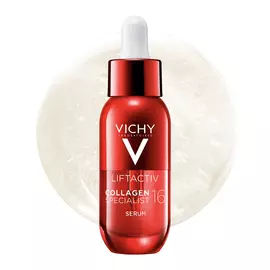



Liftactiv Collagen Specialist 16 Serum
Anti-Aging Serum to Boost Collagen
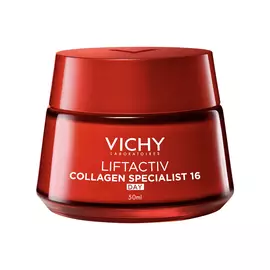

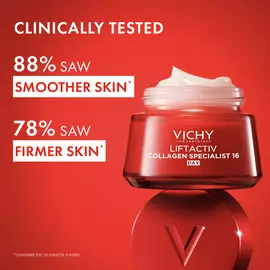

Liftactiv Collagen Specialist 16 Day Cream
Anti-Aging Face Cream to Boost Collagen




Liftactiv Collagen Specialist 16 Eye Cream
Anti-Aging Eye Cream to Boost Collagen
FAQs
What are the signs of collagen loss in the face?
The most common signs are loss of firmness, sagging along the jawline and cheeks, fine lines and wrinkles, crepey skin around the eyes and a less plump look. They usually appear gradually over the years.
What causes collagen loss?
Collagen loss is first and foremost a natural part of aging. Outside factors can make the visible signs appear sooner, especially sun exposure, along with pollution, smoking, lack of sleep and a diet high in sugar.
At what age does collagen loss start?
Collagen naturally starts to decline in early adulthood, but the visible effects build over years.1 Your 20s are a good time to build protective habits: wear broad-spectrum sunscreen every day and moisturize morning and night. In your late 20s and 30s, you can add a targeted collagen serum as the first signs of aging appear.
What do collagen peptides do for skin?
In Liftactiv Collagen Specialist 16, the Collagen Peptide is a biosynthetic peptide similar to a protein fragment found in human collagen. It brightens skin tone and improves skin firmness, and it's one of the three ingredients in Vichy's Co-Bond Technology, alongside Rhamnose and Maitake.Can skincare help with sagging skin and loss of firmness?
Yes. A consistent routine can visibly improve sagging and loss of firmness. Wear broad-spectrum SPF daily, apply the Liftactiv Collagen Specialist 16 Serum and moisturize with the Liftactiv Collagen Specialist 16 Day Cream. Skincare won't stop the natural aging process, but it can help skin look and feel its best at every age.
How often should you moisturize your face?
Moisturize twice a day, once in the morning and once before bed. Moisturizer traps water in skin, giving it a more youthful appearance. For a collagen moisturizer, try the Liftactiv Collagen Specialist 16 Day Cream after your serum, and finish with SPF in the morning.
Every skin ages differently. Get personalized recommendations matched to your skin's priorities with Vichy's free Skin Diagnosis. Start Your Skin Diagnosis
Sources


